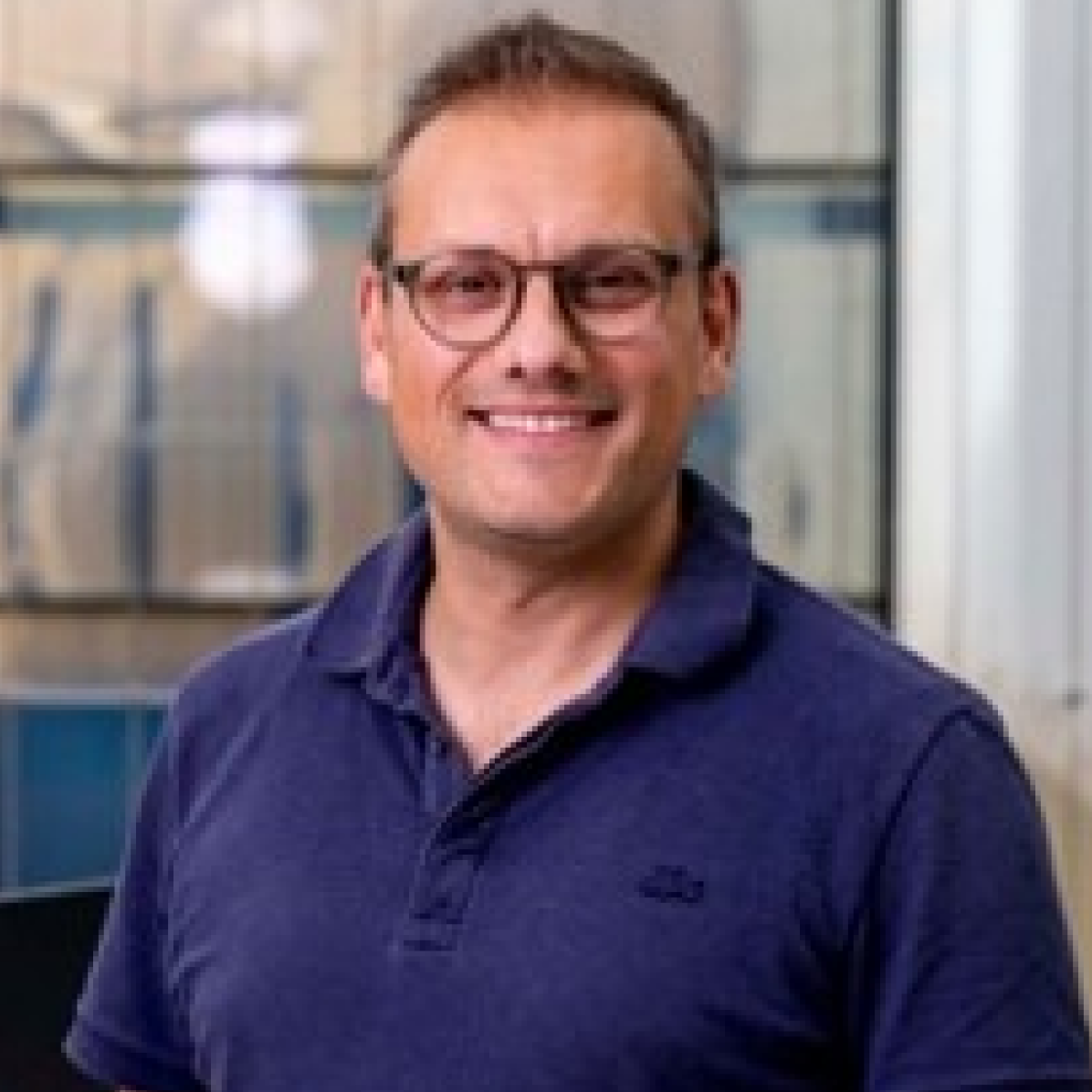
Supervisor

Marco Monopoli

Senior Lecturer

RCSI University of Medicine and Health Sciences – Department of Chemistry

“Heal4WARD brings together multidisciplinary and international Doctoral Candidates to drive innovation in healthcare. Working collaboratively, they will develop solutions to combat antimicrobial resistance and prevent wound infections.”

Background

Scientific background

Marco Monopoli has always been fascinated by the many facets of science, which led him to pursue a career as a biotechnologist. Throughout his studies and research, he learned to integrate knowledge from different scientific disciplines to address complex challenges and achieve specific goals.This multidisciplinary approach continues to shape his work today, and Marco’s laboratory brings together researchers from diverse scientific and cultural backgrounds. He is particularly passionate about mentoring students, fostering their curiosity, and helping them develop the skills and confidence needed to become independent scientists.

Personal background

Originally born and raised in southern Italy, Marco Monopoli gradually moved further north across Europe as his academic career developed. He studied Pharmaceutical Biotechnology at the University of Modena and Reggio Emilia and completed part of his studies at University College Dublin (UCD) in Ireland before graduating in Italy.Following graduation, Marco returned to Dublin to pursue a research career, completing a PhD in proteomics before moving into nanotechnology. As a postdoctoral fellow, he joined the Centre for BioNano Interactions (CBNI) at UCD, where he progressed to Principal Investigator. His research focused on bio-nano interactions, and he contributed to the development of foundational protocols and methodologies that continue to be widely used in the field.Marco subsequently moved into industry as an SFI Industry Fellow in the R&D Department of Ludger Ltd, a biopharmaceutical company based in Oxfordshire, UK. After a year in industry, he joined the Department of Chemistry at RCSI University of Medicine and Health Sciences as a StAR Research Fellow and Lecturer. Since then, he has established an independent research programme and continues to advance research and education in nanomedicine, bio-nano interactions and biomolecular corona science.


key publications

  • Monopoli, M. P., Åberg, C., Salvati, A., & Dawson, K. A. (2012).Biomolecular coronas provide the biological identity of nanosized materials. Nature Nanotechnology, 7(12), 779-786. https://doi.org/10.1038/nnano.2012.207


  • Saorin, A., Martinez-Serra, A., Henry, M., Meleady, P., & Monopoli, M. P. (2026).Mass spectrometry proteomics of the nanoparticle corona is highly dependent on sample preparation protocol. Proteomics, 26(5), 98-111. https://doi.org/10.1002/pmic.70118


  • Dobricic, M., Martinez-Serra, A., Durall, C., Nakonechna, A., Cheeseman, J., Preston, R., O’Donnell, J. S., Spencer, D. I. R., Aastrup, T., & Monopoli, M. P. (2025). Terminal sialic acids in the nanoparticle corona modulate cellular uptake. Communications Chemistry, 8(1), 308.


  • Soliman, M. G., Martinez-Serra, A., Dobricic, M., Trinh, D. N., Cheeseman, J., Spencer, D. I. R., & Monopoli, M. P. (2024).Protocols for isolation and characterization of nanoparticle biomolecular corona complexes. Frontiers in Toxicology, 6, 1393330. https://doi.org/10.3389/ftox.2024.1393330


  • Barzan, G., Kokalari, I., Gariglio, G., Ghibaudi, E., Devocelle, M., Monopoli, M. P., et al. (2022).Molecular aspects of the interaction with gram-negative and gram-positive bacteria of hydrothermal carbon nanoparticles associated with Bac8c2,5Leu antimicrobial peptide. ACS Omega, 7(19), 16402-16415.

Project Involvement and Roles

As supervisor of DC5, Marco Monopoli will be responsible for training and supervising a PhD candidate developing antimicrobial-enhanced nanoparticles functionalised with peptides for the treatment of infected wounds. His work will focus on the design, formulation and characterisation of peptide-doped nanomaterials, with the aim of developing effective therapeutic strategies for wound infection management.

In addition to providing scientific guidance and mentorship, he will host secondments and facilitate interdisciplinary training activities to support the candidate’s professional and research development. Marco will also contribute to the overall coordination, scientific advancement and collaborative training programme of HEAL-4WARD, supporting the successful delivery of the project’s objectives and outcomes.

Current activities

The BioNano Lab is a multidisciplinary research laboratory investigating diverse aspects of nanotechnology, with a particular focus on the design and formulation of nanoparticles for healthcare applications. Its research encompasses the physicochemical characterisation of nanomaterials and the study of their interactions with biological systems, including the transformations nanoparticles undergo following exposure to biomolecules present in biological fluids.

A major area of the Lab’s work is understanding the bio-nano interface and the mechanisms governing nanoparticle recognition, biodistribution and biological responses. In parallel, the BioNano Lab studies glycans and glycan-mediated processes to understand how carbohydrate structures influence bio-nano interactions, cellular recognition and downstream biological outcomes.

Through this research, the BioNano Lab aims to advance the development of safer and more effective nanomedicines, diagnostics and biomaterial-based technologies.