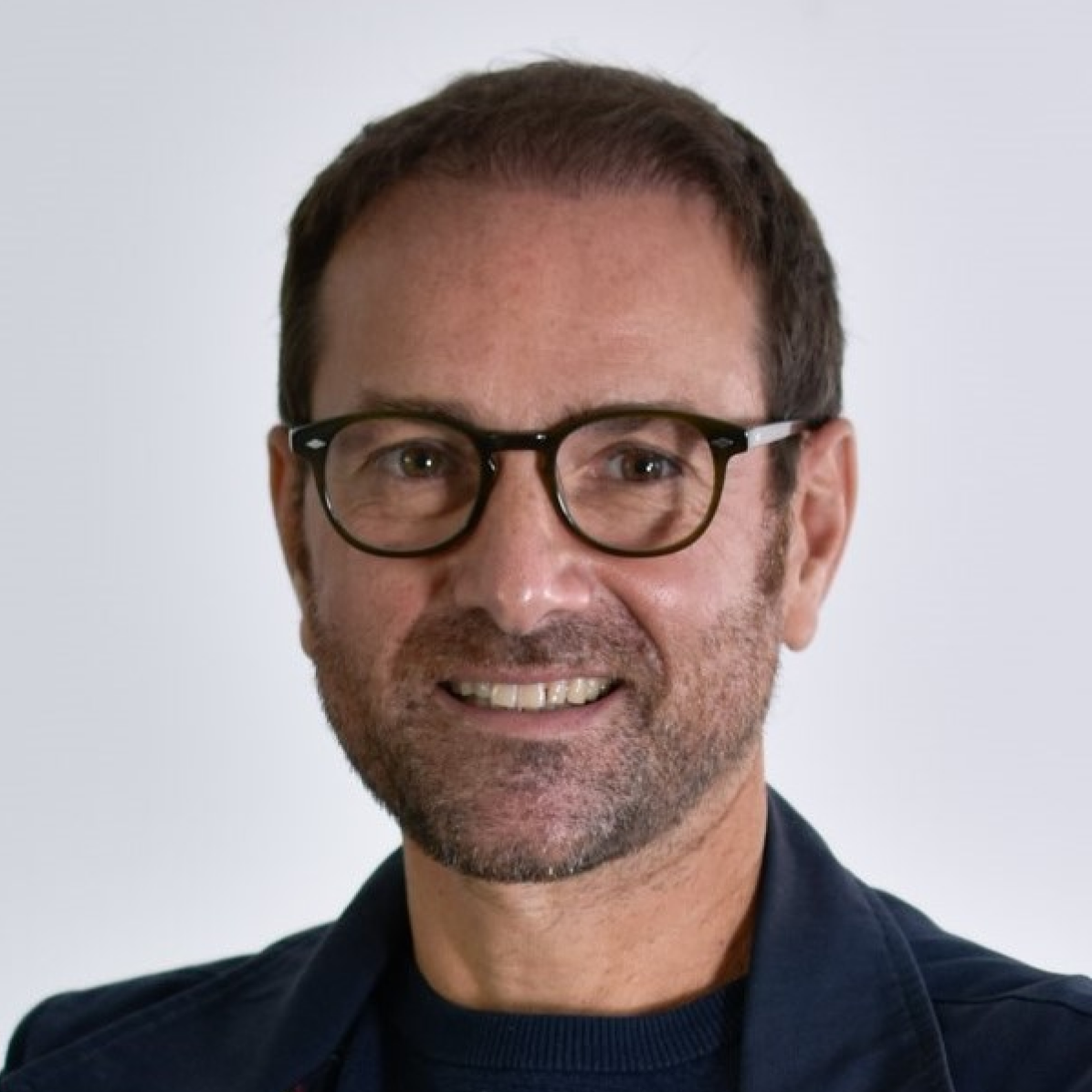
Supervisor

Mathias Destarac

Head of P3R Group at SOFTMAT Laboratory

University of Toulouse

“What excites me most about HEAL4WARD is the opportunity to combine our expertise in polymer synthesis with complementary know-how in formulation and 3D printing. For DC7, this interdisciplinary environment is key to developing innovative polymer materials tailored for next-generation wound-healing devices.”

Background

Scientific background

Mathias is a polymer chemist by training, with a background spanning both academic and industrial research. After completing his PhD at the University of Montpellier, he carried out postdoctoral research at Carnegie Mellon University in the group of Prof. Krzysztof Matyjaszewski, before joining Rhodia Research and Technologies, where he worked for nearly ten years in R&D on polymer chemistry and advanced polymerisation technologies.In 2007, he joined the University of Toulouse as Professor of Chemistry, where he currently leads the P3R research group. His research has focused extensively on controlled radical polymerisation, particularly RAFT chemistry, functional polymers and, more recently, the design of chemically degradable polymers and dynamic polymer materials. Throughout his career, he has maintained a strong interest in connecting fundamental macromolecular chemistry with applications and industrial challenges.

Personal background

Mathias started his career with ten years in industry before realising that he would thrive more in an academic environment, where he could combine scientific curiosity with greater freedom to explore new ideas. This industrial experience has strongly shaped the way he approaches research: even at the university, he has always kept a strong focus on the potential applications of his chemistry and on real-world industrial constraints.In recent years, his research has increasingly focused on polymer sustainability, particularly on how polymer materials can be designed from the outset to improve their end-of-life options.


key publications
  • Odnoroh, M.; Ivanchenko, O.; Kroeger, A.A.; Coote, M.L.; Mazières, S.; Destarac, M. (2026). Dithioketal Polymers Via Radical Polymerization of g-Dithiobutyrolactone. Angew. Chem. Int. Ed. 65, e2024128. https://doi.org/10.1002/anie.2024128


  • Ivanchenko, O.; Mazières, S.; Mallet-Ladeira, S.; Harrisson, S.; Destarac, M. (2024) Radical Copolymerization of Thionoglycolide and Derivatives for Preparation of Degradable Vinyl Polymers. Macromolecules, 57, 8059-8066. https://doi.org/10.1021/acs.macromol.4c01259


  • Ivanchenko, O.; Mazières, S.; Harrisson, S.; Destarac, M. (2023) On-Demand Degradation of Thioester/Thioketal Functions in Vinyl Pivalate-Derived Copolymers with Thionolactones. Macromolecules, 56, 4163-4171. https://doi.org/10.1021/acs.macromol.3c00312


  • Ivanchenko, O.; Mazières, S.; Poli, R.; Harrisson, S.; Destarac, M. (2022) Ring size-reactivity relationship in radical ring opening copolymerisation of thionolactones with vinyl pivalate. Chem. 13, 6284-6292. https://doi.org/10.1039/d2py01153k


  • Ivanchenko, O.; Mazières, S.; Harrisson, S.; Destarac, M. (2022) Lactide-derived monomers for radical thiocarbonyl addition ring-opening copolymerisation. Chem., 13, 5525-5529. https://doi.org/10.1039/d2py00893a


  • Ivanchenko, I.; Authesserre, U.; Coste, G.; Mazières, S.; Destarac, M.; Harrisson, S. (2021) ε-Thionocaprolactone: an accessible monomer for preparation of degradable poly(vinyl esters) by radical ring-opening polymerization. Polym. Chem. 12, 1931-1938. https://doi.org/10.1039/d1py00080b

Project Involvement and Roles

Supervisor of DC7.

Current activities

Mathias’s research activities focus on the design and synthesis of advanced polymer materials, with particular emphasis on radical polymerisation, functional and degradable polymers, and the introduction of cleavable functionalities into polymer backbones. His group develops new monomers, polymerisation strategies and macromolecular architectures aimed at combining high performance with enhanced sustainability and controlled end-of-life properties.

His individual activities span fundamental polymer chemistry, the development of new concepts for chemically degradable materials, and their translation towards applications, including coatings, adhesives and biomedical materials.
Alongside his academic activities, Mathias co-founded Ecolanka, a start-up company developing innovative degradable polymer technologies, where he serves as Chief Scientific Officer. In this role, he contributes to the scientific strategy, technology development and transfer of research innovations towards industrial applications.